
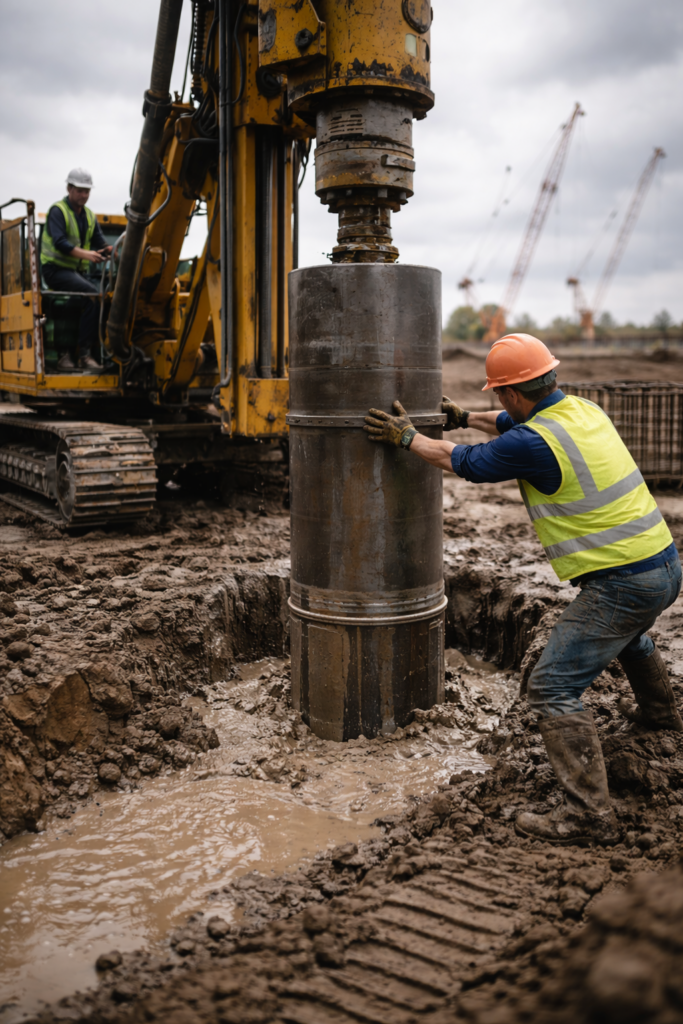
In Southern California construction, understanding when deep drilling requires casing can make the difference between a stable, structurally sound foundation and costly delays caused by collapsing boreholes or groundwater intrusion. Deep foundation systems such as caissons are designed to transfer structural loads to stronger soils or bedrock—but in certain ground conditions, drilling alone is not enough. Casing provides the added protection necessary to maintain borehole integrity, ensure proper concrete placement, and safeguard overall foundation performance.
Unlimited Drilling & Foundations, Inc. has extensive experience evaluating site-specific soil conditions and implementing casing solutions when required. Whether working on hillside construction, retaining wall systems, shoring projects, or deep caisson installations, understanding when casing becomes essential is a key part of delivering safe, durable results.
What Is Casing in Deep Drilling?
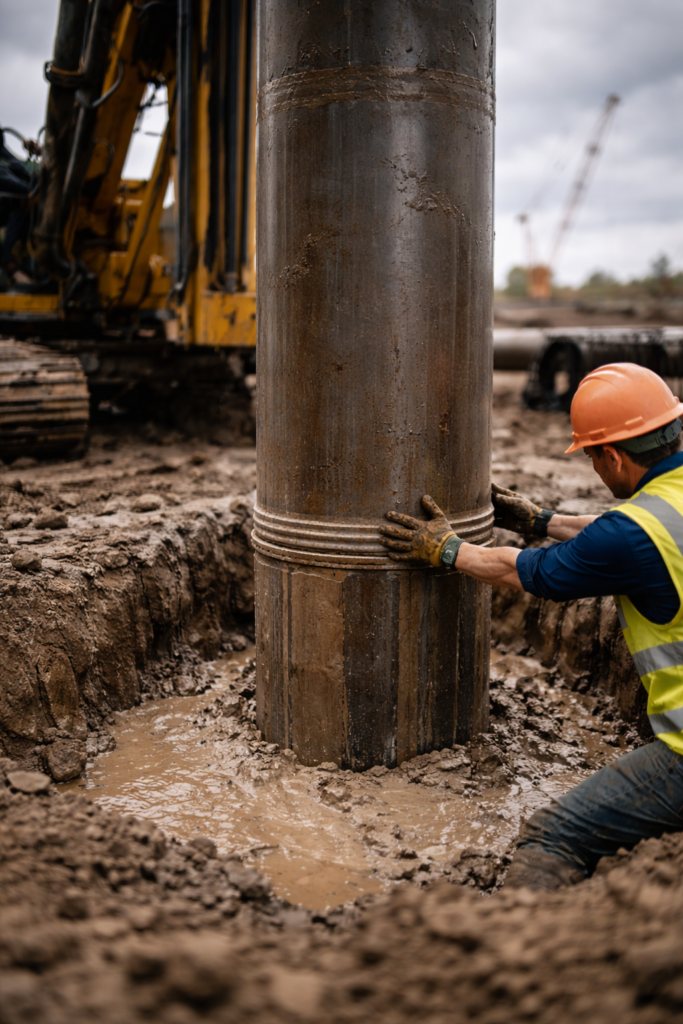
Casing is a steel pipe inserted into a drilled shaft to maintain the shape and stability of the borehole during excavation and concrete placement. It acts as a protective barrier between the surrounding soil and the drilled opening, preventing collapse and controlling groundwater infiltration.
Depending on engineering requirements and site conditions, casing may be:
- Temporary – Installed during drilling and removed after concrete placement.
- Permanent – Left in place as part of the completed foundation system.
The decision to use casing is not arbitrary. It is based on soil behavior, moisture levels, depth requirements, and access limitations that could affect borehole stability.
Why Borehole Stability Matters
During deep drilling for caissons or other foundation elements, maintaining a clean and stable shaft is critical. If the borehole walls collapse, several problems can occur:
- Loss of proper shaft diameter
- Contaminated concrete placement
- Misalignment of reinforcement cages
- Reduced structural capacity
- Project delays due to re-drilling
In unstable soils, casing acts as structural insurance—protecting both the integrity of the drilled hole and the long-term performance of the foundation.
When Deep Drilling Requires Casing
While not every drilling project requires casing, certain conditions significantly increase the likelihood that it will be necessary. Below are the most common scenarios where casing is typically recommended or required.
1. Loose or Unstable Soils
Soils such as loose sand, fill material, or highly fractured formations can easily collapse into an open borehole. When the surrounding soil cannot maintain its shape during drilling, casing stabilizes the shaft and prevents cave-ins before reinforcement and concrete are placed.
This is especially common on sites with previously disturbed soil, graded lots, or properties built on undocumented fill.
2. High Groundwater Levels
Groundwater intrusion is one of the most common reasons deep drilling requires casing. When water flows into the borehole, it can erode the sidewalls, introduce debris, and compromise concrete quality. Casing isolates the shaft from surrounding groundwater and helps maintain dry, controlled conditions during installation.
In coastal areas or during Southern California’s rainy season, elevated groundwater levels make casing particularly important.
3. Deep Caisson Installations
The deeper the drilled shaft, the greater the lateral pressure exerted by surrounding soils. At increased depths, even moderately stable soils may begin to slough or shift inward. Casing provides reinforcement against that pressure, ensuring the shaft remains structurally sound throughout the drilling process.
Unlimited Drilling & Foundations operates equipment capable of drilling to significant depths, and deeper installations often require careful evaluation to determine whether casing is appropriate.
4. Transition Zones Between Soil and Rock
Sites that shift from softer soil layers into rock formations can create irregular borehole conditions. As drilling progresses through varying materials, sidewalls may become uneven or unstable. Casing helps maintain consistent diameter and alignment when drilling across these transitions.
5. Hillside and Slope Construction
Hillside properties frequently involve variable soils and increased movement risk. In slope-adjacent drilling, casing can reduce the likelihood of sidewall collapse that could destabilize the surrounding area. This added protection is especially important when drilling supports retaining walls or slope stabilization systems.
6. Limited Access or Urban Job Sites
On tight residential lots or confined urban projects, precision matters. If a borehole collapses in a restricted-access location, remediation can be complex and time-consuming. Casing minimizes that risk by maintaining borehole integrity from the start.
Unlimited Drilling & Foundations offers multiple limited-access drilling options designed to operate in constrained spaces while maintaining quality control throughout the process.
To learn more about drilling capabilities, visit Drilling & Caissons.
Temporary vs. Permanent Casing: What’s the Difference?
Temporary Casing
Temporary casing is installed during drilling to support the borehole walls. Once reinforcement is placed and concrete is poured, the casing is typically extracted as the concrete sets. This approach is common when soil instability is limited to upper layers.
Permanent Casing
Permanent casing remains in place as part of the finished foundation. This may be required when long-term groundwater exposure, soil instability, or engineering design specifications call for additional structural protection.
The decision between temporary and permanent casing depends on engineering plans and field conditions observed during drilling.
Risks of Not Using Casing When It’s Needed
Attempting deep drilling without casing in unstable conditions can lead to:
- Repeated cave-ins requiring re-drilling
- Excess material and labor costs
- Delays in inspection approvals
- Compromised load-bearing capacity
- Long-term settlement or structural concerns
In many cases, proactive casing use reduces overall project risk and prevents far more expensive corrections later in the construction process.
How Professionals Determine Whether Casing Is Required
Determining when deep drilling requires casing involves evaluating several factors before and during installation:
- Soil reports and geotechnical recommendations
- Moisture content and groundwater presence
- Required shaft depth and diameter
- Proximity to existing structures
- Observed soil behavior during initial drilling
Even with detailed pre-construction planning, field conditions ultimately guide final decisions. Experienced drilling crews monitor borehole stability in real time and adjust methods as needed to maintain safety and quality.
The Role of Casing in Overall Foundation Performance
Casing is not simply a drilling accessory—it is a structural safeguard. By maintaining borehole shape, preventing contamination, and supporting consistent concrete placement, casing helps ensure that the finished foundation performs as designed.
For retaining walls, hillside stabilization, and deep foundation systems, maintaining structural integrity during installation is critical. Small deviations in borehole shape or reinforcement alignment can impact long-term performance. Casing provides the controlled environment necessary for reliable results.
Plan Ahead to Avoid Delays
Because casing may require additional equipment, materials, and coordination, early evaluation helps prevent scheduling surprises. Projects that proactively account for soil instability, groundwater, or deep shaft requirements are less likely to encounter costly mid-project adjustments.
Southern California sites often present variable soil conditions, particularly during wetter months. Evaluating these risks early allows contractors and property owners to align design, equipment, and scheduling appropriately.
Deep Drilling Done Right
Knowing when deep drilling requires casing is about understanding soil behavior, project demands, and the long-term performance expectations of the structure being built. When unstable soils, groundwater, depth, or access constraints threaten borehole stability, casing provides the reinforcement necessary to maintain precision and protect structural integrity.
Unlimited Drilling & Foundations, Inc. brings decades of experience to deep drilling projects throughout Southern California, carefully assessing conditions and implementing casing solutions when required to ensure safe, durable installations.
If your project involves deep foundation drilling and you want to determine whether casing may be necessary, Contact us to discuss your site conditions and project requirements.