
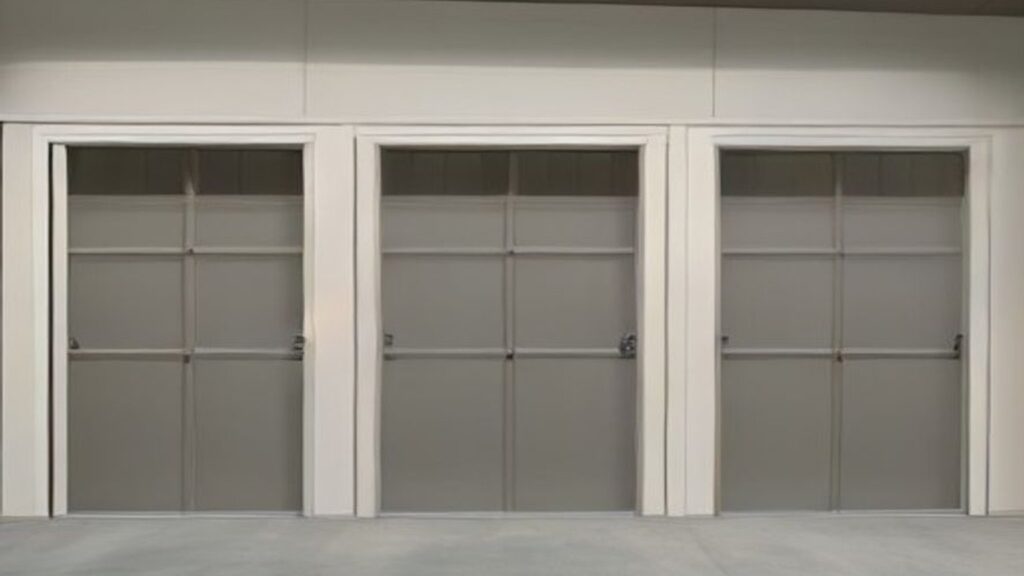
On a San Diego remodel, the garage door is easy to treat as a late allowance. The roof is in the structural set. The windows are in the envelope. The overhead door gets a dollar figure and a note to “match existing,” and then the opening sits until punch. That is how you end up with a builder-grade steel panel on a house that just spent real money on stucco and glass, or with an opener that arrives after the electrical is closed in the garage ceiling.
Specifying a garage door is a four-part decision: how the elevation reads from the street, how the door holds temperature and sound, which opener belongs on that door, and when the install can actually happen. Remodelers and general contractors who write those four lines early save the job from a last-week scramble. This is that spec conversation for San Diego residential work.
Curb appeal is a facade spec, not a catalog mood
A garage door is often the largest single plane on the front of a San Diego house. It sits on the same elevation as the roof, the entry, and the driveway. If the remodel is selling curb appeal, the door has to be chosen the way siding and windows are chosen: against the architecture, not against a showroom photo of a different house.
The practical palette is steel, wood, aluminum, and glass. Traditional raised-panel steel is the low-maintenance default and still the right call on a lot of tract and courtyard houses. Carriage-house doors give a swing-style look with modern raised panels and decorative hardware, which is the usual request on craftsman and Spanish-leaning elevations. Modern glass doors use aluminum frames and full-view tempered glass; they belong on contemporary and mid-century work where the garage is meant to read as a glazed opening rather than as a blank wall. Wood is the millwork option when the rest of the elevation is already wood-forward. None of those is a personality test. Each one either supports the elevation or fights it.
Insulation belongs on the comfort sheet
San Diego is mild until you stand in an attached garage in August or try to use that garage as a gym, a shop, or a mud room that shares a wall with the kitchen. An uninsulated door is a large hole in the thermal boundary. Insulated triple-layer steel is the construction that addresses that hole directly. The product claim that matters on a spec is not a slogan about energy. It is that a triple-layer insulated steel door keeps the garage quieter and 10–20° more comfortable. That range is enough to change whether the space is usable, and it is enough to change what the adjacent rooms feel like when the door is closed.
Write insulation as its own line. Do not bury it inside “premium door.” A glass full-view door and an insulated steel door are different thermal products. A carriage-house door can be insulated or not. If the garage is attached, conditioned, or used as living space, the insulated steel spec is the default and the glass spec needs a reason. If the garage is detached and rarely occupied, curb appeal can lead. The mistake is letting the rendering pick the R-value.
The opener is a trade coordination problem
Belt-drive, chain-drive, and wall-mount openers are not interchangeable notes at the bottom of a cut sheet. Belt-drive is the quiet residential default, the one you want when a bedroom sits over the garage. Chain-drive is the workhorse. Wall-mount units free the ceiling, which matters when the remodel is adding storage, a lift, or a cleaner ceiling plane. All three can be installed the same day as the door when the crew is set up for it. That is only true if the electrical is ready: a dedicated receptacle where the opener will live, not a dangling extension cord left for the homeowner to solve after occupancy.
Put the opener on the electrical drawing and on the door sub’s scope. A door that arrives without an opener decision is how you get a chain unit on a quiet-house spec, or a ceiling unit in a garage that was framed for a wall mount. Same-day opener installation is a scheduling asset, not a reason to skip the spec. The door company should be able to install the opener with the door. The GC should have already told them which one.
Schedule the opening like a window, not like a fixture
A garage door needs a finished opening: rough size confirmed, slab or apron in a state that will not change, exterior finish far enough along that the door is not a construction shield. If the door goes in too early, it gets used as a job-site gate and shows up at punch with dings. If it goes in too late, the house sits with a boarded opening while the client is trying to move cars back in. The useful sequence on a San Diego remodel is: lock the style and insulation during design development, confirm the opening during framing, order so the unit arrives when the exterior is ready, and give the installer a clear day.
Same-day installation is real when the company stocks or stages the work and sends a crew that can finish in a visit. It is not a substitute for lead time on a custom wood door or a full-view glass unit. Put custom doors on the same calendar as windows. A $49.95 lube and tune is maintenance after occupancy, not a closeout item. Closeout is: door travels, opener programmed, safety reversal working, exterior clean.
Who can hold that spec in this county
The sub has to be a garage-door company, not a handyman with a spring bar. Factory-trained, background-checked technicians are the labor standard. Parts on the truck keep a misfit roller from becoming a two-week delay. Transparent upfront pricing, no-pressure estimates, and a workmanship warranty are how the allowance and the callback stay with the people who hung the door.
California licensing is part of the spec, not an afterthought. CA Lic. #1134199 is the number Newman Garage Doors publishes. The company is a family-owned extension of Newman Windows & Doors, trusted for garage door work since 2004 in Southern California — a later line of a window-and-door business that itself dates to 1993. Remodelers who already know the parent company should still spec the garage-door entity, because the truck, the parts, and the techs are that operation.
Newman Garage Doors is the San Diego County example that maps onto this spec: repair when a spring, cable, or off-track door shows up during construction; new doors in steel, wood, aluminum, or glass; belt, chain, or wall-mount openers; same-day service when the opening is ready. They list San Diego, Carlsbad, Encinitas, Oceanside, Vista, Escondido, and Chula Vista. The services number is (760) 438-8080; 877-7-NEWMAN is also published. Put one of those on the subcontractor contact sheet the way you would put a window supplier’s number there, and call before the opening is already a problem.
A short spec that actually ships
Write four lines and stop hiding them in a finish schedule footnote. One: door type and material, matched to the elevation (raised-panel steel, carriage house, modern glass, or wood). Two: insulated triple-layer steel when the garage is attached or occupied, with the 10–20° comfort claim treated as a performance target, not as advertising. Three: opener type, mount, and electrical. Four: install window, same-day if the product allows, with factory-trained techs and parts on the truck. If a spring fails on an existing door during the job, that is a repair line, not a reason to reopen the design.
The bottom line
On a San Diego remodel, the garage door is facade, insulation, opener, and schedule. Choose the style against the elevation, put triple-layer insulated steel on attached garages unless glass is the architectural point, coordinate belt, chain, or wall-mount openers with the electrician, and hire a licensed door company that can install in a single visit. Do that in design development, not during punch.