
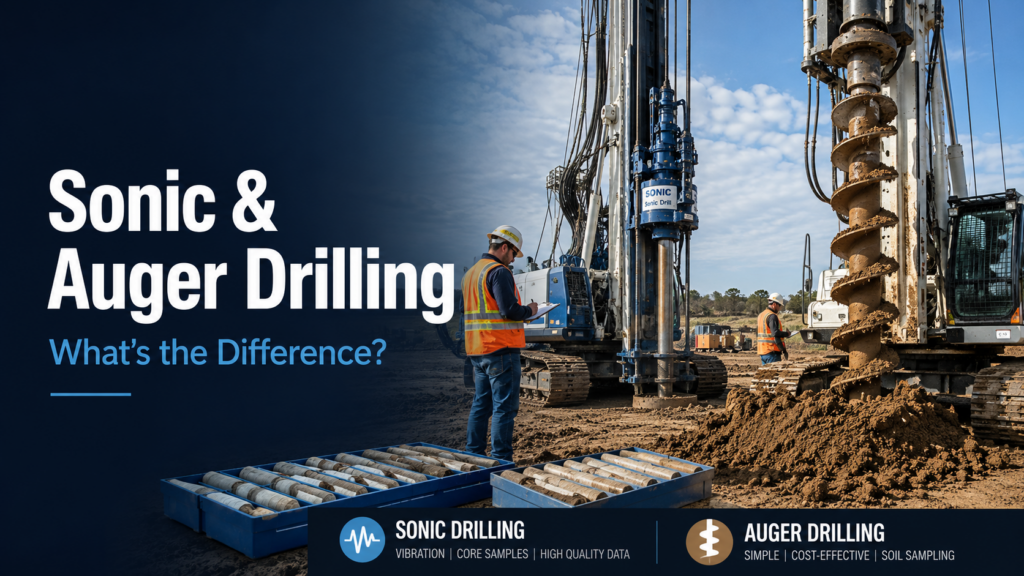
The difference between sonic and auger drilling comes down to how each one cuts into the ground: auger drilling turns a rotating screw to bore through soil, while sonic drilling uses high-frequency vibration to slice through even tough, mixed, or rocky formations. Both are proven ways to reach the subsurface for sampling, testing, and construction — but they perform very differently depending on the ground and the goal. For property owners and engineers working across San Diego County's varied terrain, knowing which is which can save real time and money.
At Unlimited Drilling & Foundations Inc., we have spent decades navigating San Diego's difficult ground since 1993, and matching the right drilling approach to the site is something we take seriously on every project. This guide breaks down the sonic vs auger drilling methods side by side — how each works, where each shines, and how to think about which one fits your project.
By the end, you will understand the mechanics behind both methods, the practical trade-offs in speed, cost, and sample quality, and the situations where one clearly beats the other.
Sonic and Auger Drilling Solve the Same Problem in Very Different Ways
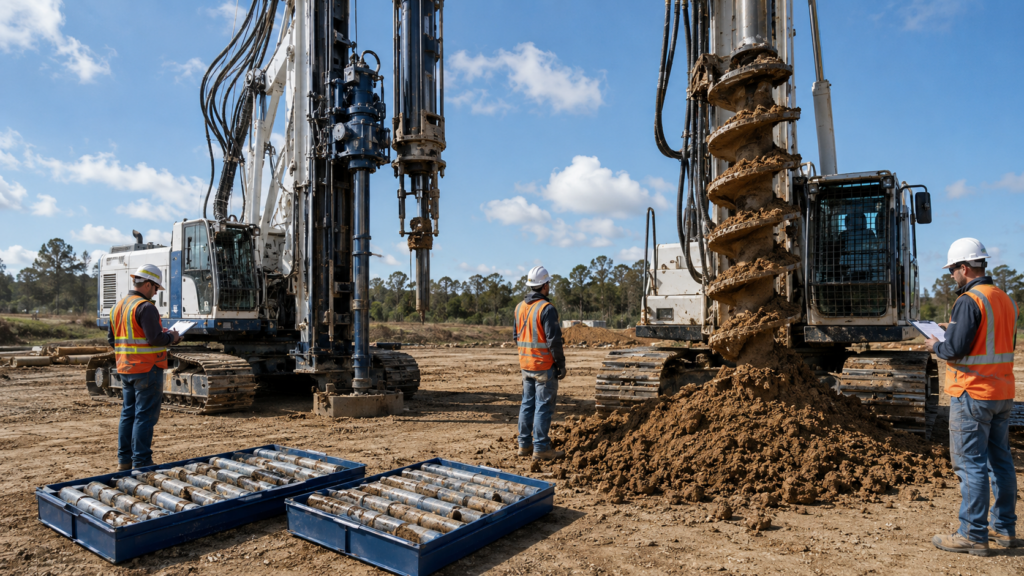
Both sonic and auger drilling exist to advance a hole into the earth so crews can collect samples, install wells, or prepare for construction — but the way they get there shapes everything about the job. The choice affects how fast the work goes, how clean the samples are, how much waste is generated, and how much the project costs.
Auger drilling is the older, more familiar workhorse. It relies on a rotating helical screw — the auger — to grind through soil and carry cuttings up to the surface. Sonic drilling is the newer, more specialized method, using rapid vibration combined with rotation to drive a drill string through ground that would slow an auger to a crawl.
Neither is universally “better.” The right answer depends on the soil, the depth, the type of samples needed, and the budget — which is exactly why understanding both is worthwhile before a rig ever shows up.
How Does Auger Drilling Work?
Auger drilling advances a rotating screw into the ground, and as it turns, the spiral flights lift soil cuttings up and out of the hole. It is one of the most widely used drilling methods in geotechnical and environmental work because it is straightforward, fast in the right conditions, and cost-effective.
There are two common types:
- Solid-stem augers — a continuous solid screw, typically used for simpler borings in stable soils
- Hollow-stem augers — a screw with a hollow center that lets crews collect samples or install wells through the middle without pulling the auger out
Auger drilling performs best in soft to medium, unconsolidated soils. Its main limitations show up when the ground gets difficult: hard rock, cobbles, boulders, and very deep targets can stop an auger or slow it dramatically. Sample quality can also suffer some disturbance compared with more specialized methods.
Sonic Drilling Uses High-Frequency Vibration to Cut Through Tough Ground
Sonic drilling advances by sending high-frequency vibrations down the drill string, which fluidizes the soil at the bit and lets the casing slice through difficult formations quickly. Paired with rotation, that vibration allows sonic rigs to power through ground that gives augers trouble.
The standout advantages of sonic drilling include:
- Continuous, relatively undisturbed core samples that give a clear picture of the soil profile
- Strong performance in tough formations such as cobbles, boulders, and mixed or layered ground
- Minimal cuttings and waste, which is a major benefit on contaminated sites where disposal is costly and regulated
- Faster penetration through difficult layers that would slow other methods
The trade-off is cost. Sonic equipment and operation are generally more expensive than auger drilling, so the method tends to earn its keep on challenging sites or where sample quality and reduced waste justify the premium.
The Key Differences Between Sonic and Auger Drilling
The clearest way to compare the two methods is side by side across the factors that matter most on a real project:
| Factor | Auger Drilling | Sonic Drilling |
|---|---|---|
| Mechanism | Rotating helical screw bores through soil | High-frequency vibration plus rotation slices through ground |
| Best ground conditions | Soft to medium, unconsolidated soils | Difficult, mixed, rocky, or layered formations |
| Sample quality | Good, with some disturbance possible | Excellent, continuous and relatively undisturbed cores |
| Speed in tough ground | Slows significantly or stalls | Fast and consistent |
| Waste generated | More cuttings brought to surface | Minimal waste — ideal for contaminated sites |
| Relative cost | Lower, very cost-effective | Higher equipment and operating cost |
| Typical uses | Routine geotechnical and environmental borings | Challenging sites, high-quality coring, low-waste sampling |
In short, auger drilling is the efficient, economical choice for straightforward conditions, while sonic drilling buys you speed, sample quality, and clean operation when the ground gets complicated.
Which Drilling Method Is Right for Your Project?
The right drilling method is the one that matches your ground conditions, your sampling needs, and your budget — there is rarely a one-size-fits-all answer. A few practical guidelines can point you in the right direction:
- Choose auger drilling when the soil is relatively soft and uniform, the depth is moderate, and cost efficiency is a priority
- Choose sonic drilling when the ground is rocky, mixed, or difficult, when you need high-quality continuous cores, or when minimizing waste on a contaminated site matters
- Consider the site access, because steep hillsides and tight lots can limit which equipment can even reach the work area
- Factor in the end goal, since environmental testing, geotechnical analysis, and foundation work each have different sampling demands
San Diego's terrain makes that last point especially real. Steep coastal hillsides, tight residential lots, and variable soils mean the hardest part of a job is often simply reaching the spot that needs drilling. We specialize in drilling in difficult-to-access locations and steep hillsides, with limited-access rigs that need as little as 36 inches of width, and we have drilled caissons up to 50 feet deep on demanding sites. Having completed more than 1,000 projects on time and within budget since 1993 — all handled in house rather than passed to subcontractors — we know how much the right approach matters once the ground gets complicated.
Frequently Asked Questions About Sonic and Auger Drilling
Is sonic drilling better than auger drilling?
Not universally — it depends on the project. Sonic drilling excels in difficult ground, delivers better core samples, and produces less waste, but it costs more. Auger drilling is faster and far more economical in soft, uniform soils. The “better” method is the one that fits your specific site and goals.
Is sonic drilling more expensive than auger drilling?
Generally, yes. Sonic rigs and operation carry higher costs than conventional auger drilling. That premium is often worth it on challenging sites, where sonic drilling's speed, sample quality, and reduced waste disposal can offset the higher day rate.
Can auger drilling reach bedrock or hard layers?
Auger drilling struggles with hard rock, cobbles, and boulders, and it can stall or slow dramatically when it hits them. For sites where tough or rocky layers are expected, sonic drilling is usually the more capable choice.
Which method produces less waste?
Sonic drilling generates significantly less cuttings and waste than auger drilling. That makes it especially valuable on contaminated sites, where every bit of removed soil may require regulated handling and disposal that adds to project costs.
Which drilling method gives better core samples?
Sonic drilling typically provides continuous, relatively undisturbed cores that show the soil profile clearly. Auger drilling can still collect useful samples, particularly with hollow-stem setups, but with more potential for disturbance than sonic coring.
Get the Right Drilling Approach for Your San Diego Site
Understanding sonic versus auger drilling comes down to matching the method to the ground — speed and economy in straightforward soils, or capability and clean coring when conditions get tough. Make that choice well, and the rest of the project stands on a far more reliable footing.
If you have a project on San Diego's challenging terrain and want experienced guidance on reaching the subsurface the right way, the team at Unlimited Drilling & Foundations Inc. is ready to help. We have been working this region's ground since 1993, we keep the work in house, and we are glad to talk through what your specific site needs. Reach out for a free estimate and get your project moving with confidence.